

How to Keep Data Secure During Cloud Integration
September 10, 2025
Over the past few years, the cloud services market has experienced rapid and significant growth. According to a study, more than 70% of businesses use cloud integration solutions to run their businesses, store data, and help them become more digital. This fast growth isn’t going to stop as long as businesses are looking for ways to save money, be flexible, and grow. However, with growth comes a big worry: keeping data safe.
Over the past few years, the cloud services market has experienced rapid and significant growth. According to a study, more than 70% of businesses use cloud integration solutions to run their businesses, store data, and help them become more digital. This fast growth isn’t going to stop as long as businesses are looking for ways to save money, be flexible, and grow. However, with growth comes a big worry: keeping data safe.
What is Cloud Integration?
Cloud integration is the process of connecting different applications, systems and data sources, whether on-premises or in the cloud, to create a unified environment that enables real-time data sharing, collaboration and efficient operations.
An organization can integrate CRM, e-commerce, and accounting software. This guarantees that all systems update consumer information, process orders quickly, and keep correct financial records. Without integration, individual systems would operate inefficiently.
The pros are clear, but there are also risks that come with merging. Security is very important because a lot of private data is constantly being sent back and forth. Attackers could access private documents, disrupt work, or steal consumer data through system vulnerabilities. Companies must always follow cloud data security best practices during mergers.
Read also: Why Cloud Integration Is Necessary for Today’s Enterprises
Best Practices to Keep Data Secure During Cloud Integration
Here are the best practices for how to secure data in cloud integration:
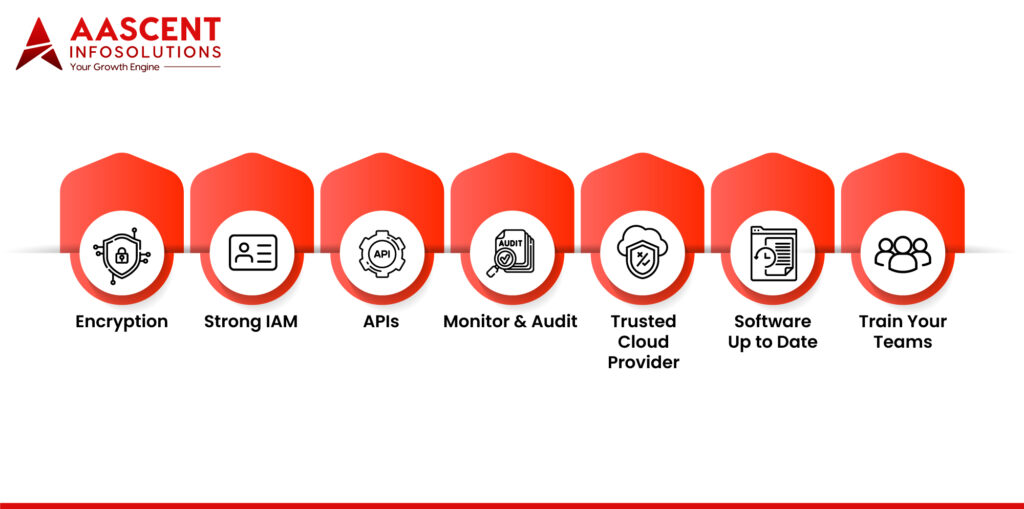
1. Enable End-to-End Encryption
One of the most effective techniques to prevent unauthorized entry for data protection in cloud integration is encryption. This protects stolen data from being read without the correct keys. Whether sent or stored, information must be protected.
- All saved files and databases should be secured with AES-256.
- TLS protocols protect data between services.
- Encrypt the data that flows between systems that work together and services from other companies.
- Keep your encryption keys in safe places and change them regularly.
- Regularly test encryption methods to make sure they work right.
2. Enforce Strong IAM
Access to systems should be restricted to authorized individuals only. Make sure that Identity and Access Management (IAM) works well. Without strong IAM, accounts could be used in bad ways, letting people in without permission.
- Make user accounts need multi-factor authentication (MFA).
- Give rights based on job function with role-based access controls (RBAC).
- Check user rights often and make changes as needed.
- To improve security, get rid of accounts that aren’t being used or are idle.
- Use session timeouts to lower the multi-cloud integration risks that come from leaving devices alone.
3. Protect Your APIs
Cloud services mostly use APIs to communicate, but hackers regularly try to get into them. To stop leaks, you need to keep them safe.
- To control who can access APIs, use authentication codes and gateways.
- Check each request to stop threats like injection or spoofing.
- Set a limit on rates to stop abuse and prevent overload.
- Keep detailed logs of API behavior to help with investigations if problems happen.
4. Monitor and Audit Everything
When handling integrated systems, visibility is very important. Regular audits and tracking help find strange behavior early on, before it becomes a big problem.
- Monitor system performance and user activity across platforms.
- Keep detailed records of all attempts to view and transfer data.
- Look over audit trails often to find behavior that doesn’t seem right.
- Protect logs from being changed and limit who can see them.
- To deal with threats quickly, set up automatic alerts.
5. Select a Trusted Cloud Provider
How safe your data is will depend on which cloud services provider you choose. A provider with good practices and certifications lowers the danger by a large amount.
- Make sure the service company follows rules like ISO or SOC.
- Ensure that security and backup systems are integrated from the start.
- Check to see how open the service is about how they handle incidents.
- Look at how they’ve dealt with data breaches and recovery attempts in the past.
- Make sure the service makes it clear who owns the data and who is responsible for it.
6. Keep Software Up to Date
In many cases, hackers get in by using old software. These holes can be filled by keeping all tools and frameworks up to date.
- As soon as security patches and fixes come out, you should apply them.
- Make sure that all of your APIs and tools are up to date.
- Set up automatic updates to keep fixing from taking too long.
- Remove any software that is outdated or no longer supported.
7. Train Your Teams
Even the best security systems can be broken into if workers are careless. By getting regular training, employees become more aware of security issues and start using safe methods.
- Discuss phishing, malware, and password security often.
- Show your staff how to spot suspicious links and attachments.
- Give clear instructions on how to safely handle sensitive info.
- Stress how important MFA and safe login habits are.
- Help people take responsibility and report issues swiftly.
Read also: Cloud Integration vs Cloud Migration: What’s the Difference?
Conclusion
To remain agile, competitive, and innovative, businesses must leverage the cloud. However, the process should never compromise data protection. Every line of defence is very important, from encryption and IAM to API protection and real-time tracking. This security method is made stronger by using a reputable cloud integration services, keeping systems up to date, and teaching teams.
Companies that follow these tips will keep their cloud data safe, which will help them do the right thing, lower their risks, and gain customer trust. It will no longer be a threat after that, and it will even help the country grow. According to Aascent InfoSolutions, data security should be at the heart of any digital change. Get in touch with us right away to find out how to protect your important data and make sure your cloud integration goes smoothly.


