Digital Engineering vs Quality Engineering: What’s the Difference?
August 11, 2025
According to recent reports, the global digital engineering market will reach $1.8 trillion by 2030. Conversely, the increasing demand for robust, high-performance software is compelling businesses to implement quality engineering services. Speed is not enough in today’s hyper-digital era. Businesses today ask for precision, performance, and predictability. That’s where digital engineering and quality engineering play mission-critical roles. However, both of them are distinct approaches that serve different purposes.
Digital engineering services aim to design the future using simulation, data, and virtual modelling. But quality engineering solutions ensure that your application is secure, reliable, and scalable. If you’re launching new products or modernizing legacy systems, you must understand the difference between digital and quality engineering to make the right tech investment. This blog breaks down everything you need to know–from core definitions to business benefits and use cases.
What is Digital Engineering?
Digital engineering is an electronic approach that uses the latest technologies to create, build, and maintain systems. This includes AI, cloud computing, and data analytics. From creating innovative products to enhancing their performance, the benefits of digital engineering are always measurable.
Core Functions
Model-based Systems Engineering (MBSE): Follows modern-day documentation methods with digitalized models. It helps simulate designs and identify threats in the early developmental stage, reducing resource wastage.
Digital Twin Technology: Create the virtual replica of an existing physical product, system, or process. It uses performance metrics, environmental inputs, and user interactions to mirror real-world behaviour.
AI and ML: AI has the true potential to analyze huge data sets much faster than humans. ML identifies similar patterns, forecasts results, and suggests improvements to boost performance and reliability. Both of them allow teams to innovate faster without compromising on quality.
Cloud Computing & IoT Integration: Cloud and IoT are redefining the digital engineering landscape. A cloud environment is a platform for storing, processing, and evaluating digital data sets securely. However, IoT connects physical products to digital infrastructure.
Simulation & Virtual Testing: Digital implementation reduces the need for expensive physical prototypes. It enables data engineers to predict product behaviour in real-time without the hassle. Digital engineering services reduce development time while improving reliability and minimizing operational costs.
Read also: The Role of AI and Machine Learning in Digital Engineering
What is Quality Engineering?
Quality engineering is a forward-thinking approach that embeds quality into the development cycle. From creating user-centric applications to enhancing their security, the benefits of quality engineering are measurable. They identify issues in the early stage, making software more resilient.
Core Functions
Shift-Left Testing: Identifying potential threats early in the development stage allows teams to innovate with quality. Nearly 85% of code defects occurring in the development stage can be easily navigated through quality engineering services. This approach reduces the testing time, enhances resource allocation, and minimizes operational costs.
Test Automation: Quality engineering services systemize the deployment and test pipelines. It helps developers create high-grade, secure, and tailored software. Plus, it speeds up delivery, improves code quality, and reduces manual efforts.
Performance & Scalability: Scaling testing methods is an effective strategy to address evolving cyber threats. It improves the core performing, helping your software to meet growing business needs.
CI/CD Integration: Quality engineering solutions integrate fluently with CI/CD pipelines. It provides immediate feedback, faster iterations, and enhance deployments.
Data-driven Quality Metrics: Quality engineering often uses analytical data and KPIs to measure code quality. It helps them find test effectiveness while ensuring that the code is ready to deploy.
Read also: Software Testing and QA Trends in 2025
Key Differences between Digital Engineering and Quality Engineering
While both digital engineering vs. quality engineering play a key role in building successful digital products. But they follow separate approaches. Understanding their core differences in terms of goals and implementation can help you make the right choice. Let’s take a glance at the comparison between digital and quality engineering.
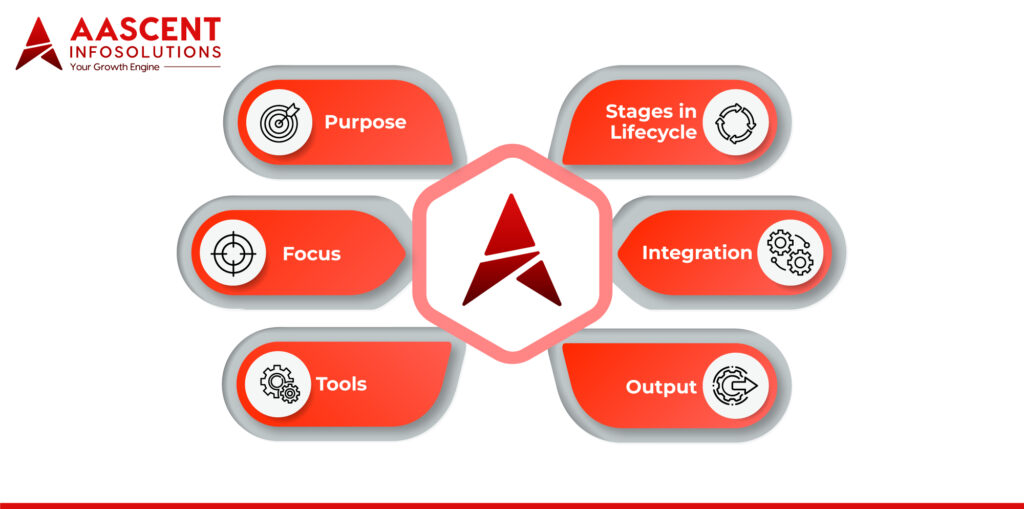
| Aspect | Digital Engineering | Quality Engineering |
| Purpose | To design, simulate, and optimize intelligent systems and processes. | To ensure software quality, reliability, and performance across all stages. |
| Focus | System architecture, modelling, and innovation. | Software functionality, performance, security, and stability. |
| Tools | MATLAB, Cameo Systems Modeller, Simulink, Ansys. | Selenium, JMeter, Postman, TestRail. |
| Stages in Lifecycle | Starts at concept and spans the full system lifecycle. | Active from development through deployment and maintenance. |
| Integration | Works closely with DevOps, design tools, and the latest technologies. | Developed in the SDLC and CI/CD pipelines, easing the validation. |
| Output | Scalable and high-performing digital systems. | Secure and error-free software application. |
Overall, digital engineering focuses on developing the right solution. Quality engineering ensures that it performs well.
Read also: Data Engineering vs Digital Engineering
How to Select the Right Approach for Your Organization
Still unsure whether to invest in digital engineering or quality engineering? Here are key factors to consider when aligning your goals with the right engineering focus:
Choose Digital Engineering if:
- You’re building complex systems from scratch.
- You want to modernize legacy infrastructure.
- You’re looking to speed up time-to-market.
- You want to enhance the customer experience.
Choose Quality Engineering if:
- You want to ensure flawless performance across platforms.
- You’re following Agile or DevOps practices.
- Your application should meet compliance and security standards.
- You want to reduce post-release bugs.
Some of the top-tier enterprises integrate both digital and quality engineering to foster innovation and stability.
Conclusion
As of 2025, digital engineering vs. quality engineering play vital roles but serve different purposes. Digital engineering fuels innovation and optimizes design through simulation and integration. Whereas quality engineering ensures performance and delivers a consistent, reliable user experience.
Understanding the key differences between digital and quality engineering allows you to invest in the right resources. Adopt the best tools that align perfectly with your business strategies. From boosting efficiency and reducing costs, the benefits of data engineering help you stay ahead of the curve.
Want to future-proof your software development? Then choose Aascent InfoSolutions as your go-to partner. We offer high-grade digital and quality engineering services tailored to your business objectives. Contact us today and we’ll help you optimize your development process.